Why Motorized Shading and Lighting Controls Are the Finishing Touch Every Luxury Home Needs
Why Motorized Shading and Lighting Controls Are the Finishing Touch Every Luxury Home Needs
Category: Smart Home Automation | Read time: ~6 min
There's a version of a beautifully designed home that still feels off. The architecture is right. The finishes are right. The furniture is right. But every morning someone walks around adjusting blinds by hand. Every evening someone hunts for the right light switch. Every time a guest arrives, the house needs to be manually set.
That gap — between how a home looks and how it actually lives — is exactly what motorized shading and lighting controls are designed to close.
For Hamilton homeowners investing in a custom build or high-end renovation, these two systems aren't luxury add-ons. They're the infrastructure that makes everything else perform.
What Motorized Shading Actually Does
Motorized shades are exactly what they sound like — window coverings controlled by a motor rather than a cord or chain. But the value isn't in the motor. It's in what the motor makes possible.
When your shades are motorized, they can respond to time of day, sunlight levels, temperature, or a single tap on your phone. They can be grouped by room or by orientation — so all south-facing windows adjust together at noon without anyone thinking about it. They can be tied to your lighting system so that when the shades come down, the lights come up to compensate.
That kind of coordination is invisible when it's working. And when it's working, your home feels effortless in a way that's hard to explain until you've experienced it.
The Convenience Case
The convenience argument for motorized shading is straightforward — but it's worth laying out clearly, because it compounds.
Morning. Your shades open gradually at a scheduled time, letting natural light in before your alarm goes off. No cords. No pulling. No forgotten blinds left closed until noon.
Midday. South and west-facing shades adjust automatically as the sun angle changes, cutting glare on screens and reducing solar heat gain without anyone touching anything.
Evening. A single "Good Night" scene closes every shade in the house, dims the lights to a warm tone, and locks the front door. One tap, or it happens on a schedule.
Guest mode. Before anyone arrives, a "Welcome" scene opens the shades to the right position, sets the lighting to a warm, flattering level, and makes the home look like it's been perfectly prepared — because it has.
For families, busy professionals, or anyone who owns a secondary property in the Hamilton area, the time savings and mental load reduction are real. But the bigger argument for motorized shading isn't convenience — it's impact.
The Design Impact You Can't Get Any Other Way
Motorized shading is one of the few upgrades that improves a home's design rather than just adding to it.
Here's why: manual blinds and shades have hardware. Lift cords, wand controls, chain loops — all of it visible, all of it compromising the clean lines your designer or architect worked to create. Motorized shades have none of that. The fascia is clean. The profile is slim. The window looks like a window, not like a window with equipment attached to it.
Beyond hardware, motorized shading gives you access to fabrics and systems that simply aren't available in manual configurations. Roller shades with sub-millimetre precision alignment across a bank of windows. Honeycomb shades in a great room that drop in perfect sync. Solar screens that filter light without blocking the view — controlled to the exact percentage that flatters the space.
The result is a window wall that looks architectural, not dressed. That distinction matters enormously in a high-end interior.
How Lighting Controls Change Everything
Motorized shading paired with manual lighting controls is good. Motorized shading integrated with a lighting control system is a different category of home entirely.
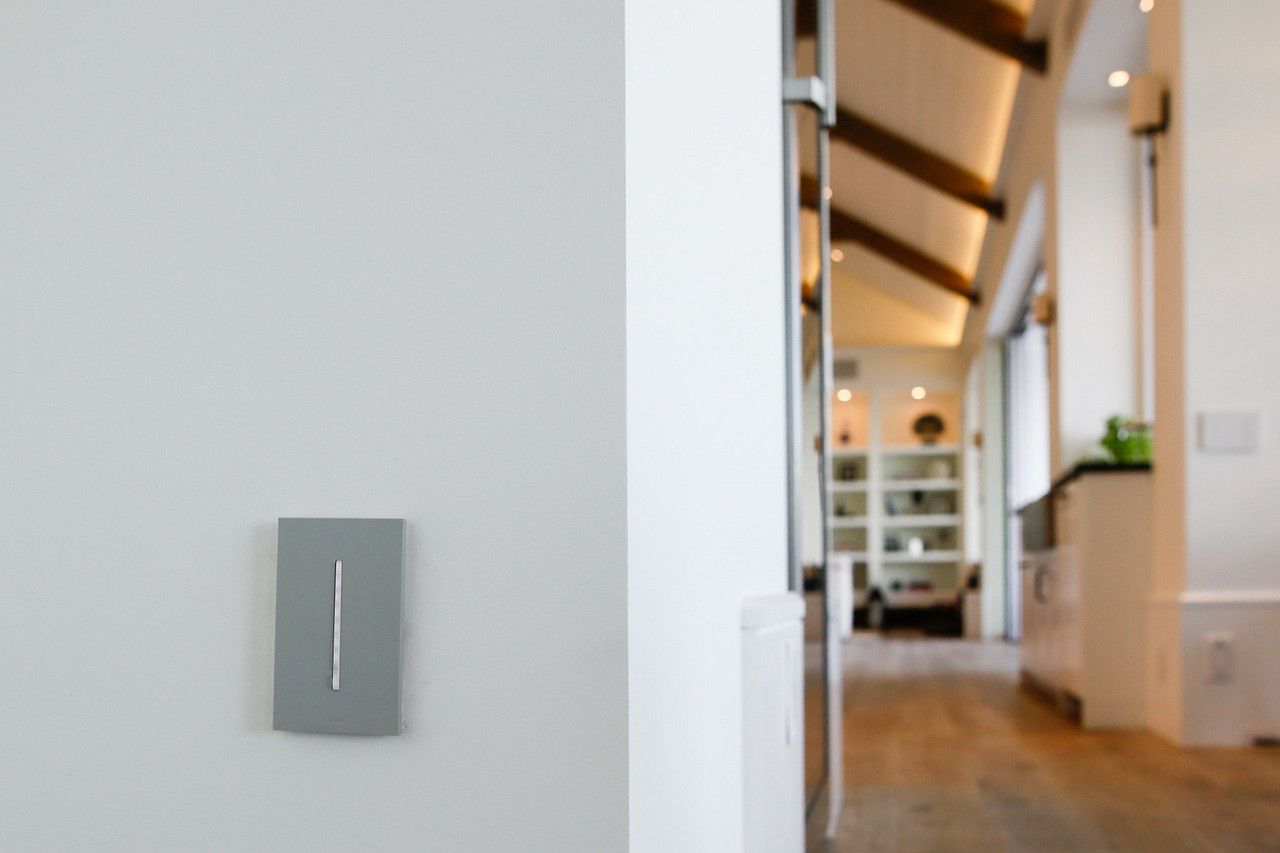
A lighting control system replaces individual switches with a unified interface — keypads, touchscreens, voice, or app — and lets you define scenes rather than settings. Instead of adjusting six different dimmers to create the right atmosphere for dinner, you press one button labelled "Dinner" and every light in the space moves to its correct level, colour temperature, and direction simultaneously.
That's not a small convenience. It's a fundamental change in how you relate to your home.
The Science Behind the Scene
Human-centric lighting — tuning both the intensity and colour temperature of light to match the time of day — is increasingly well-supported by research on circadian rhythm and wellbeing. Cooler, brighter light in the morning and at midday supports focus and alertness. Warmer, dimmer light in the evening signals to your body that it's time to wind down.
A lighting control system makes this automatic. Your home can move through a full lighting arc across the day without a single manual adjustment. The result is a space that doesn't just look right — it feels right, in a way that clients often describe as the home being "calming" or "easy to be in" without being able to pinpoint why.
What Great Lighting Control Looks Like in Practice
The kitchen shifts from a bright, cool task light in the morning to a warmer, more intimate tone as the day winds down — without anyone touching a switch.
The home office maintains consistent, flattering light tuned for focus during work hours, then transitions automatically when you close your laptop.
The primary bedroom dims gradually in the evening, hitting near-darkness by the time you're ready to sleep — and wakes you with a gentle increase in warm light before your alarm sounds.
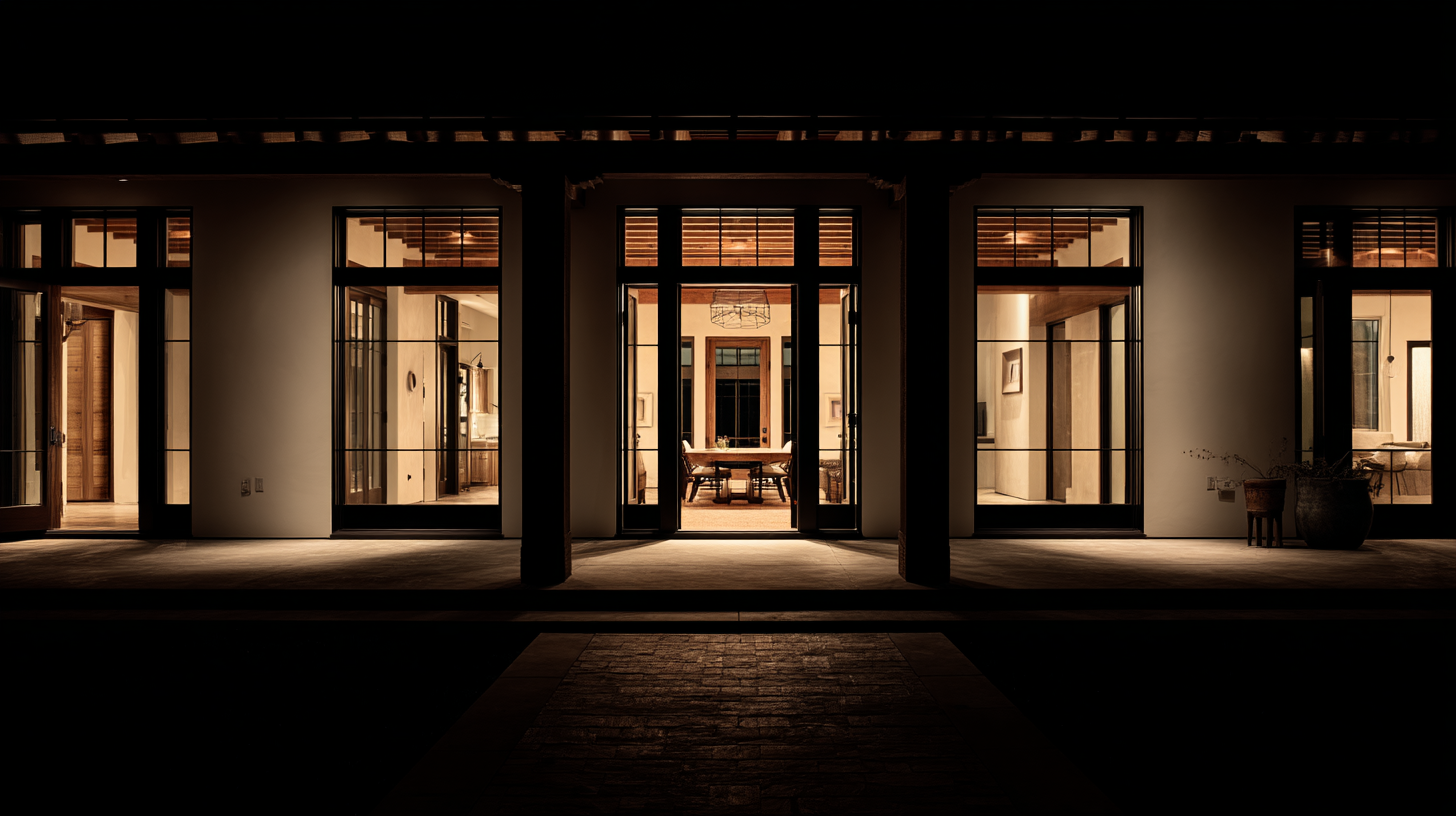
The outdoor space responds to sunset, activating landscape lighting and patio ambience at the right moment every night, adjusted automatically for seasonal changes.
Why These Two Systems Belong Together
Motorized shading and lighting controls address the same problem from two directions: too much light and too little light. When they're integrated on the same platform — Lutron, Control4, Savant, or a similar system — they work together intelligently.
Shades drop to block afternoon glare; lights compensate. Natural light fills the room; electric light backs off to save energy. The sun sets; the interior transitions seamlessly from natural to artificial light without a visible gap.
That integration is what separates a smart home from a home with smart devices. One is a collection of features. The other is a system that thinks ahead.
What to Expect From Installation
Motorized shading and lighting control systems are best specified during the design phase of a build or renovation. Running the appropriate wiring — low-voltage for shade motors, dedicated circuits for keypads and controllers — is far simpler before walls are closed.
For existing homes, retrofit solutions exist. Wireless motorized shades can be added without new wiring. Smart lighting retrofits can often work with your existing panel and switch boxes. The experience won't be identical to a hardwired system, but for many homeowners it's a practical and effective starting point.
A proper installation includes programming — setting up scenes, schedules, and integrations — which is as important as the hardware itself. A system that isn't programmed thoughtfully won't perform the way it should, regardless of the quality of the components.
The Bottom Line
Motorized shading and lighting controls aren't the most visible upgrade in a home. They don't have the immediate wow factor of a statement kitchen or a show-stopping bathroom. What they do is make every other moment in the home better — quieter, easier, more considered.
For a home that's been designed to a high standard, that's exactly the point. The goal was never to impress guests in the first five minutes. It was to build something that feels exceptional every single day.
That's what these systems deliver.
[Ready to add motorized shading or lighting controls to your Hamilton home? Contact Mavric Electric for a consultation.]