Smart Power & Battery Storage
Category: Smart Power & Battery Storage Reading Time: ~9 min
Battery Storage as an Energy Resilience Strategy: Standalone, Solar-Paired, or Generator Backup
Battery storage has moved from a niche add-on to a core resilience decision for Hamilton homeowners — one that works on its own, or as the missing link between solar and true energy independence, or as the quiet partner to a standby generator. Here's how to think about which role it should play in your home.
The short answer
A home battery system is no longer just "a battery for your solar panels." Installed correctly, it's a resilience layer that can stand entirely on its own, extend the value of an existing solar array, or work alongside a whole-home generator to cut fuel use and eliminate the transfer gap.
Standalone battery backup systems in Hamilton typically run $14,000 to $18,000 installed for a single unit, with multi-battery whole-home systems ranging $28,000 to $55,000+ — and pairing a battery with Savant Power smart load management adds meaningful runtime and monitoring value without adding another battery.
Why battery storage is a resilience strategy on its own
Homeowners often assume a battery only makes sense if they already have solar. That's no longer accurate. A standalone battery — charged from the grid during off-peak hours — provides:
- Silent, instant backup. Systems like the Tesla Powerwall 3 detect a grid interruption within milliseconds and switch over with no generator start-up delay, no fuel, and no exhaust.
- Selective or whole-home coverage. Depending on battery count and home size, a system can back up critical circuits (fridge, sump pump, home office) or the entire panel.
- Rate arbitrage. In homes on time-of-use billing, a battery can charge overnight at off-peak rates and offset daytime peak-rate consumption — a benefit unrelated to outages at all.
- Zero moving parts. No annual fuel line inspection, no combustion engine maintenance, no ESA-required exhaust clearances to plan around.
For an older Hamilton home in a neighbourhood like Durand or Kirkendall — where panel capacity is often limited and adding a large-output generator can mean panel upgrades — a standalone battery is frequently the lower-friction path to real resilience.
As an accessory to solar: closing the loop
For homes with solar already installed, a battery converts intermittent generation into dispatchable power. Without storage, solar-only systems commonly shut down during a grid outage — a safety requirement, since inverters can't backfeed power onto lines utility crews may be working on. Adding storage:
- Lets the solar array continue charging the battery during daylight hours of an outage
- Allows stored solar energy to be used at night or during the next outage window, rather than exported back to the grid for credit
- Meaningfully shortens payback period, since self-consumption of solar energy is worth more than export credits under most current Ontario billing arrangements
"The homes getting the most value from solar right now aren't the ones with the biggest arrays — they're the ones storing what they generate instead of selling it back for pennies on the dollar."
As a companion to a standby generator
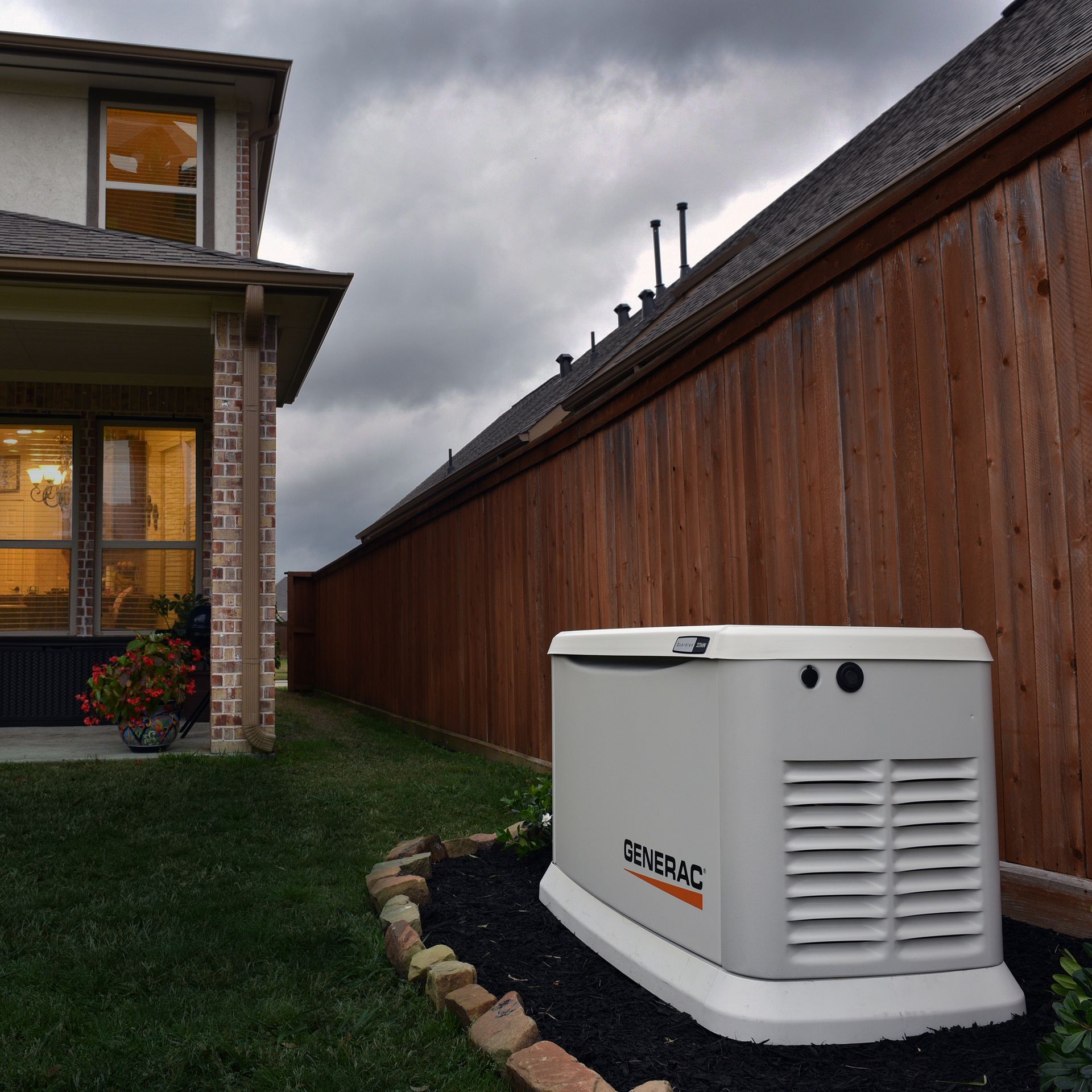
Battery storage and a Generac whole-home generator aren't competing technologies — paired together, they solve each other's weak points.
- The transfer gap. A generator typically takes 10–30 seconds to start and transfer load. A battery bridges that gap instantly, so sensitive electronics never see an interruption.
- Fuel efficiency on short outages. Most outages last under two hours. A battery can absorb the entire event without the generator ever firing, saving fuel and engine hours for the long-duration outages that actually need it.
- Quieter operation. For overnight or short daytime outages, a battery keeps the home running without engine noise — a real consideration on tighter urban lots.
- Extended runtime on propane-restricted properties. In rural areas around Hamilton where propane delivery can be delayed during a widespread outage, a battery buys time before the generator's fuel supply becomes the limiting factor.
Where Savant Smart Load management fits in
Adding a battery — or a battery-plus-generator system — solves the resilience question. Savant Power's load management platform solves the efficiency and visibility questions that come next.
Extending battery life: Battery capacity is finite, and how a home draws from it during an outage determines how long that capacity lasts. Savant automatically sheds or prioritizes circuits based on rules set in advance — keeping refrigeration, sump pumps, and networking equipment running continuously while cycling down high-draw, non-essential loads like electric dryers, pool pumps, or secondary water heaters. This can extend usable backup runtime by hours on the same battery capacity, rather than requiring a larger (and more expensive) battery bank to cover peak-load scenarios that rarely happen simultaneously.
Monitoring and insights: Outside of outage events, Savant provides circuit-level visibility into where electricity is actually being used — not just a single whole-home number, but a breakdown by circuit and appliance over time. For homeowners, this turns into:
- Identifying which appliances or systems are driving the largest share of the bill
- Spotting abnormal consumption early (a failing appliance, a space heater left running, a well pump short-cycling)
- Verifying that a battery is charging and discharging as expected, rather than finding out during the next outage that it wasn't
- Data to make an informed decision about whether to add a second battery, add solar, or right-size a generator — instead of guessing
For a homeowner weighing a battery-only system against a battery-plus-generator system, Savant is frequently the deciding factor: it makes a single battery perform like a larger one by managing when and what draws from it.
What it costs in Hamilton?
| SYSTEM TYPE | INSTALLED COST RANGE | TYPICAL SCOPE |
|---|---|---|
| Single Battery Unit (eg. Savant PS20, Tesla Powerwall 3) | $18,000 - $40,000+ | Critical circuits or partial-home backup |
| Multi-Battery Home System | $28,000 - $75,000+ | Full-home backup, extended runtime |
| Savant Load Management (add-on) | $8,000 - $12,000+ | Circuit-level monitoring + automated shedding |
| Battery + Whole Home Generator System | $40,000 - $80,000+ | Full resilience: instant + extended backup |
Ontario note: Battery installations that connect to the grid require ESA permitting and, in most cases, coordination with your local utility (Alectra or Enbridge, depending on service type) for interconnection approval. Your installer should be handling this as part of the project, not leaving it to you to navigate.
Financing the investment
Most homeowners don't pay for a battery system in cash, and they don't need to. Mavric Electric works with Financeit to offer 0% financing and payment deferral options on battery, solar, and generator installations — turning a $14,000–$55,000 project into a predictable monthly payment rather than a lump sum. Financing details, including approved terms, are available during your assessment (OAC).
Which path is right for your home?
- You want simple, silent backup with no solar plans: A standalone battery, sized to critical circuits or the whole home.
- You already have solar and want to stop losing energy to export credits: Add storage to your existing array.
- You want both instant backup and unlimited runtime: Pair a battery with a Generac standby generator.
- You want to get more out of whatever battery capacity you choose: Add Savant load management — it's the piece that makes the rest of the system perform better, regardless of which path you pick.
Tags: Tesla Powerwall · Savant Power · Battery Storage · Generac · Energy Resilience · Hamilton ON · ESA Permit · Financing
Ready to find the right resilience strategy for your home?